Homemade Ramen
Highlighted under: Global Gourmet Bites
Discover the art of making delicious homemade ramen from the comfort of your kitchen. This recipe brings the rich flavors and comforting textures of traditional ramen right to your table.
Making ramen at home allows you to customize the flavors and ingredients to your liking. This recipe combines homemade broth with fresh noodles, ensuring a delightful meal that warms the soul.
Why You Will Love This Recipe
- Rich umami flavors in every slurp
- Customizable toppings for a personal touch
- Satisfying and hearty, perfect for any meal
- A fun and rewarding cooking experience
Mastering the Broth
The key to a truly memorable ramen experience lies in the broth. This rich and flavorful base is achieved by simmering aromatic ingredients like onion, garlic, and ginger, infusing the liquid with deep umami notes. The addition of soy sauce and miso paste enhances the savory profile, making it irresistible. Don’t rush this step; allowing the broth to simmer for at least 20 minutes will bring out the best flavors. Remember, a good broth is the heart of any ramen dish.
When preparing your broth, consider experimenting with different types of broth bases. While chicken and vegetable broth are classic choices, trying a pork or beef broth can elevate your ramen to new heights. You can also adjust the seasoning to your taste, adding a little more soy sauce or miso paste for a richer flavor. Ultimately, the broth is customizable, so feel free to make it your own!
Choosing Your Noodles
Ramen noodles come in various types, and choosing the right one can significantly affect your dish's texture and flavor. Fresh ramen noodles are often preferred for their chewiness and ability to absorb broth flavors, while dried noodles offer convenience and longer shelf life. Both options can yield delicious results, so it comes down to personal preference and availability.
When cooking your noodles, make sure to follow the package instructions closely, as cooking times can vary. The goal is to achieve a perfect al dente texture, ensuring the noodles hold their shape and don’t become mushy when combined with the hot broth. Once cooked, be sure to drain them well and rinse briefly under cold water if you prefer a firmer texture.
Toppings Galore
One of the most exciting aspects of homemade ramen is the endless possibilities for toppings. From soft-boiled eggs to crunchy bean sprouts, each addition can enhance the overall dining experience. Soft-boiled eggs, with their creamy yolks, provide a rich contrast to the savory broth, while green onions add a fresh, crisp element. Don’t hesitate to get creative with your toppings!
You can also explore various regional toppings to make your ramen unique. For instance, adding corn and butter gives a Hokkaido-style twist, while kimchi can bring a spicy kick. Don’t forget to include textures; the combination of crunchy bamboo shoots and silky mushrooms can create a satisfying mouthfeel that complements the broth and noodles beautifully.
Ingredients
For the Broth
- 8 cups chicken or vegetable broth
- 1 onion, quartered
- 4 cloves garlic, crushed
- 1 inch ginger, sliced
- 2 tablespoons soy sauce
- 1 tablespoon miso paste
- Salt to taste
For the Noodles
- 4 servings ramen noodles (fresh or dried)
- Water for boiling
Toppings
- Soft-boiled eggs
- Chopped green onions
- Nori sheets
- Sliced mushrooms
- Bamboo shoots
- Bean sprouts
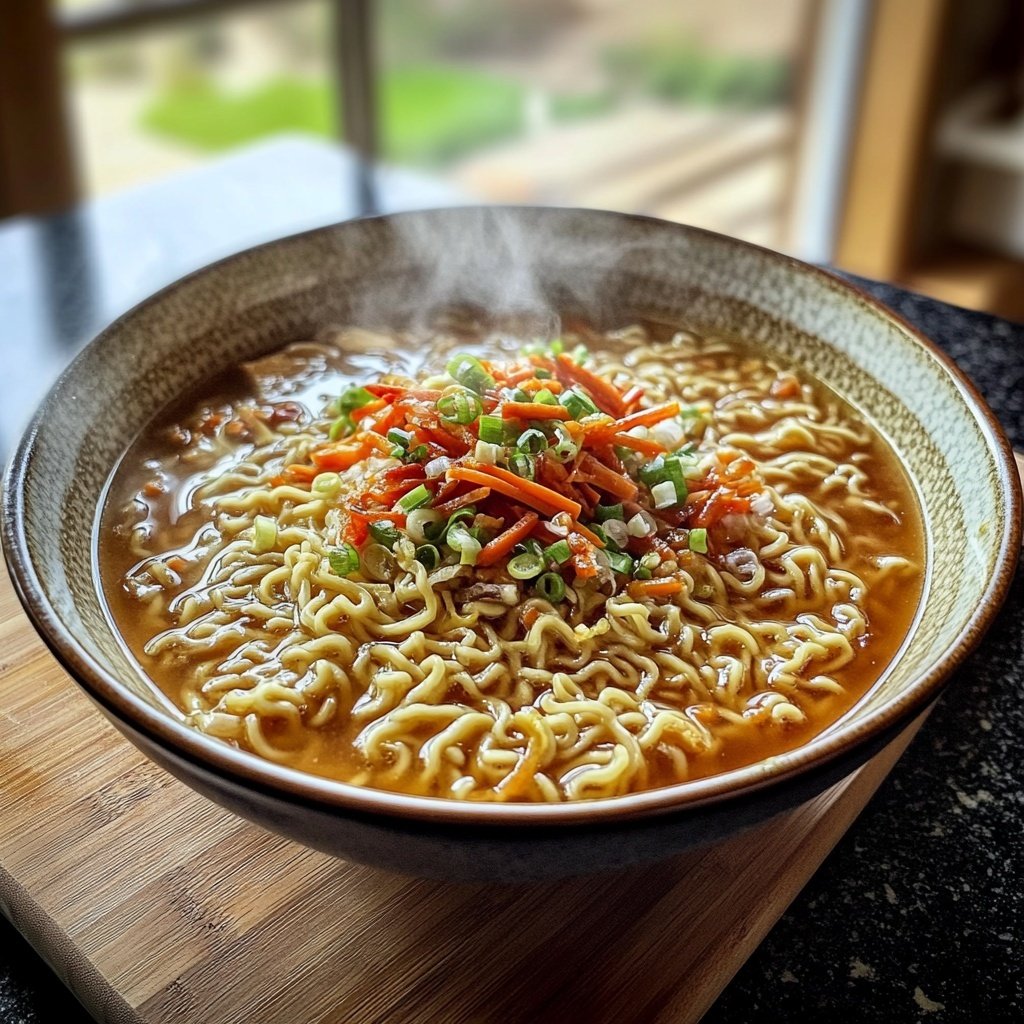
Gather all the ingredients and prepare to make a delicious bowl of ramen!
Instructions
Prepare the Broth
In a large pot, combine chicken or vegetable broth, onion, garlic, ginger, soy sauce, and miso paste. Bring to a boil, then reduce heat and let simmer for 20 minutes. Strain the broth to remove solids and return it to the pot. Season with salt to taste.
Cook the Noodles
In a separate pot, bring water to a boil. Add ramen noodles and cook according to package instructions until al dente. Drain and set aside.
Assemble the Ramen Bowls
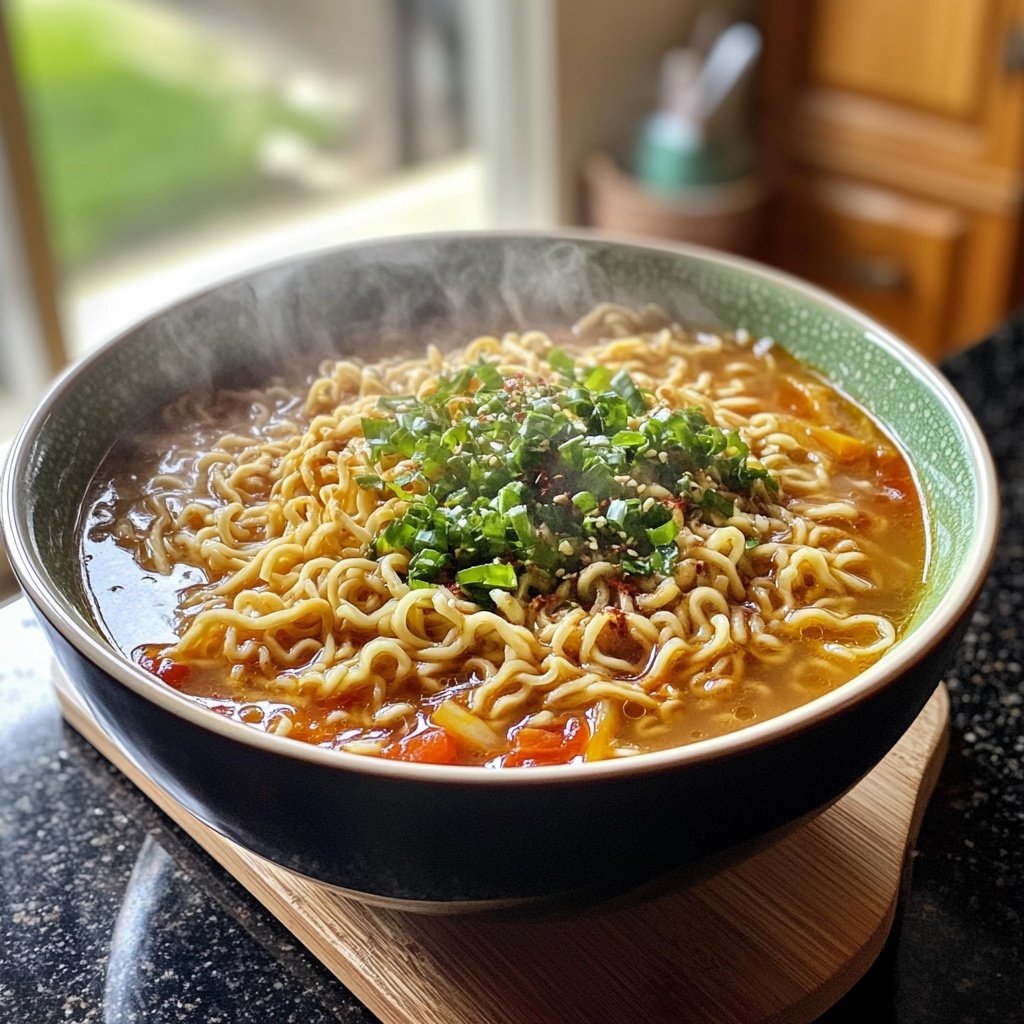
Divide the cooked noodles among four bowls. Pour the hot broth over the noodles and top with your choice of toppings such as soft-boiled eggs, green onions, nori, mushrooms, bamboo shoots, and bean sprouts.
Enjoy your homemade ramen while it's hot!
Pro Tips
- Feel free to customize your ramen with any favorite toppings or proteins, such as chicken, pork, or tofu.
Storing Leftovers
If you happen to have leftover ramen, storing it properly is crucial to maintaining its quality. Keep the broth and noodles separate to avoid sogginess. Store the broth in an airtight container in the refrigerator, and it should last for up to three days. The noodles can be kept in a separate container, ideally also in the fridge, but consumed within two days for the best texture.
When ready to enjoy your leftovers, reheat the broth gently on the stove and cook the noodles briefly in boiling water until heated through. Fresh toppings can be added at the last moment, ensuring your second serving is as delicious as the first.
Pairing Suggestions
Ramen is a versatile dish that pairs well with various sides and beverages. For a light accompaniment, consider serving a simple cucumber salad dressed with rice vinegar and sesame oil. This refreshing side can cleanse the palate between bites of rich ramen.
For drinks, a light, crisp beer or a chilled sake can complement the flavors of the broth beautifully. If you prefer non-alcoholic options, try serving green tea or even a refreshing iced tea to balance the savory notes of the ramen.
Variations to Try
Once you've mastered the basic ramen recipe, don’t hesitate to experiment with variations. Consider adding different proteins like grilled chicken, tofu, or even shrimp for a seafood twist. You can also incorporate seasonal vegetables to enhance both flavor and nutrition, making your ramen dish even more appealing.
Another fun variation is to play with different broth bases. Try making a spicy miso broth for a kick or a creamy tonkotsu broth for a rich, indulgent experience. Each variation can take your homemade ramen to new levels, keeping your culinary adventures exciting.
Questions About Recipes
→ Can I use store-bought broth?
Yes, using store-bought broth is a great time-saver. Just ensure it's a good quality for the best flavor.
→ How can I make this recipe vegetarian?
Simply use vegetable broth and add tofu or vegetables as protein options.
→ Can I make the broth ahead of time?
Absolutely! The broth can be made in advance and stored in the refrigerator for up to 3 days or frozen for longer storage.
→ What type of noodles should I use?
Fresh ramen noodles are ideal, but dried noodles will work well too. Just adjust cooking time accordingly.
Homemade Ramen
Created by: Tabitha Green
Recipe Type: Global Gourmet Bites
Skill Level: Intermediate
Final Quantity: 4 servings
What You'll Need
For the Broth
- 8 cups chicken or vegetable broth
- 1 onion, quartered
- 4 cloves garlic, crushed
- 1 inch ginger, sliced
- 2 tablespoons soy sauce
- 1 tablespoon miso paste
- Salt to taste
For the Noodles
- 4 servings ramen noodles (fresh or dried)
- Water for boiling
Toppings
- Soft-boiled eggs
- Chopped green onions
- Nori sheets
- Sliced mushrooms
- Bamboo shoots
- Bean sprouts
How-To Steps
In a large pot, combine chicken or vegetable broth, onion, garlic, ginger, soy sauce, and miso paste. Bring to a boil, then reduce heat and let simmer for 20 minutes. Strain the broth to remove solids and return it to the pot. Season with salt to taste.
In a separate pot, bring water to a boil. Add ramen noodles and cook according to package instructions until al dente. Drain and set aside.
Divide the cooked noodles among four bowls. Pour the hot broth over the noodles and top with your choice of toppings such as soft-boiled eggs, green onions, nori, mushrooms, bamboo shoots, and bean sprouts.
Extra Tips
- Feel free to customize your ramen with any favorite toppings or proteins, such as chicken, pork, or tofu.
Nutritional Breakdown (Per Serving)
- Calories: 500 kcal
- Total Fat: 15g
- Saturated Fat: 3g
- Cholesterol: 170mg
- Sodium: 1200mg
- Total Carbohydrates: 70g
- Dietary Fiber: 4g
- Sugars: 5g
- Protein: 20g